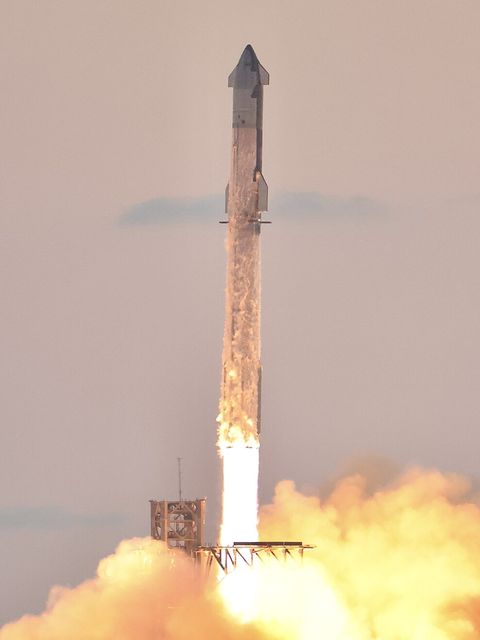
Mission overview
Starship Flight 15 could be the flight where SpaceX tries something no rocket company has done: catch both stages of an orbital rocket back at the launch tower. SpaceX has not announced an official launch date. Planning material published in September put the earliest launch at October 19, 2026, while some trackers list early November.
The flight is expected to use Super Heavy Booster 22 and Ship 42, both of the larger Block 3 design, and to launch from the new Orbital Launch Pad 2 at Starbase, Texas.
The first catch would follow a now familiar routine. A few minutes after liftoff, the Super Heavy booster would fly back to Starbase and be caught by the tower's mechanical "chopstick" arms. SpaceX has caught boosters this way before, but this would be the first catch of a Block 3 booster and the first at Pad 2, whose new chopsticks use electromechanical actuators instead of hydraulic pistons.
The second catch would be the real first. Ship 42 would continue to orbit, then reenter the atmosphere, fly back to Starbase and, if all goes to plan, be caught by the tower as well. SpaceX has never tried to catch the Starship upper stage. Elon Musk said on September 14 that the company may attempt it on Flight 15 if Flight 14 went well, and put the chance of success on the first try at "at least 50 or 60 percent." Flight 14 reached orbit.
SpaceX has been rehearsing. On September 11 and 12, the Pad 2 tower lifted Ship 42 into catch position and connected the quick-disconnect arm that would drain leftover propellant from the ship after a catch.
If both catches succeed, Starship would be the first orbital rocket to bring both stages back intact to the launch pad, the key step toward the first fully reusable orbital rocket. Reflying both stages, which SpaceX is aiming for, would come after.
Nothing is final. SpaceX has not confirmed the catch attempt, the payload or the orbital path, and the date and plan can change before launch.