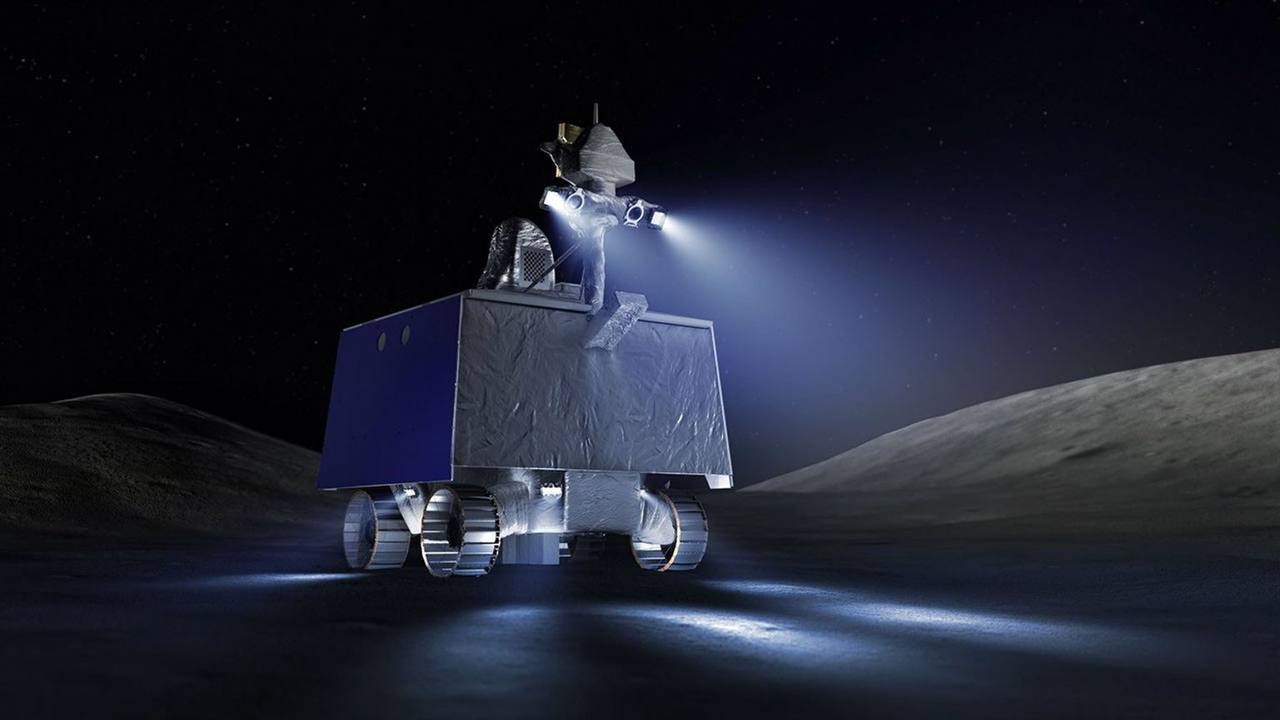
Blue Origin will design payload-specific accommodations for a lunar volatiles science rover and show how its flight design would unload the rover onto the Moon under a task order called CS-7. A separate contract option would cover the rover’s delivery and safe deployment on the lunar surface.
The base portion of CS-7 covers designing payload-specific accommodations and demonstrating how Blue Origin’s flight design would unload the rover onto the lunar surface.
Blue Origin is responsible for the complete landing mission architecture. Its work will include designing, analyzing and testing a large lunar lander capable of safely delivering the rover to the Moon.
The contract does not yet commit Blue Origin to that delivery. Instead, it includes an option for delivering and safely deploying the rover on the lunar surface.

The rover has a targeted science window for a 100-day mission that requires it to land by late 2027. That schedule makes the delivery decision consequential for the planned science campaign.
Responsibilities are divided between the landing provider and the agency. Blue Origin will develop and test the landing architecture, while NASA will handle rover operations and science planning.
CS-7’s base work is intended to address the rover’s specific payload needs and demonstrate how Blue Origin’s flight design would place it on the surface. The broader delivery mission would proceed only if NASA exercises the contract option.
NASA plans to make that decision after the base task has been completed and reviewed and after Blue Origin’s first flight of its Blue Moon MK1 lander has also been reviewed.
Blue Origin will design the rover-specific accommodations and demonstrate how its flight design would unload the rover onto the lunar surface under the base task. NASA will decide whether to exercise the option after completion and review of the base task and review of Blue Origin’s first Blue Moon MK1 flight.
If NASA exercises the option, the contract calls for the rover to be delivered and safely deployed on the Moon. The rover’s targeted science window requires a landing by late 2027.