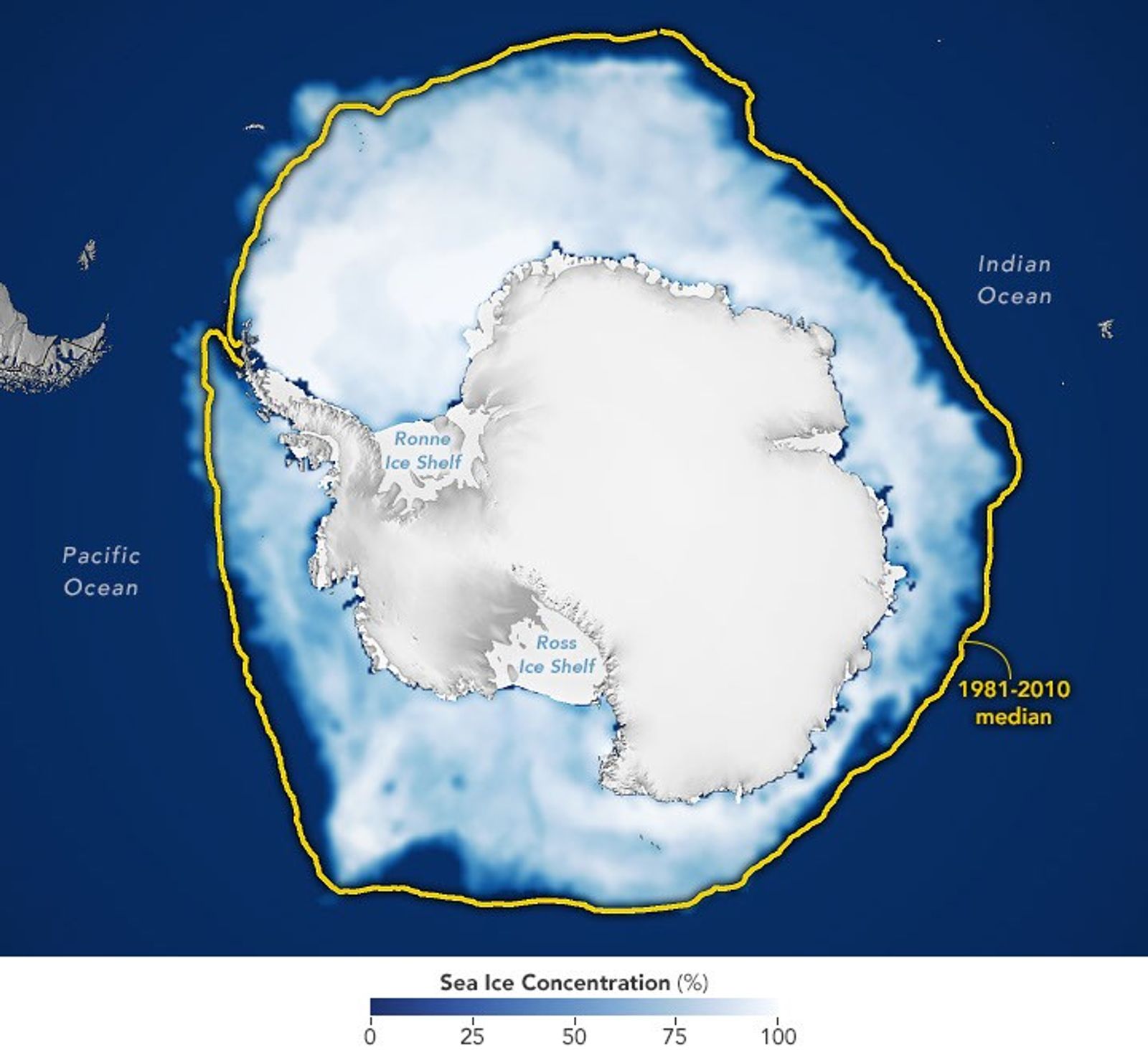
NASA and the National Snow and Ice Data Center said the estimated extent ranked as the third-lowest annual maximum on record.
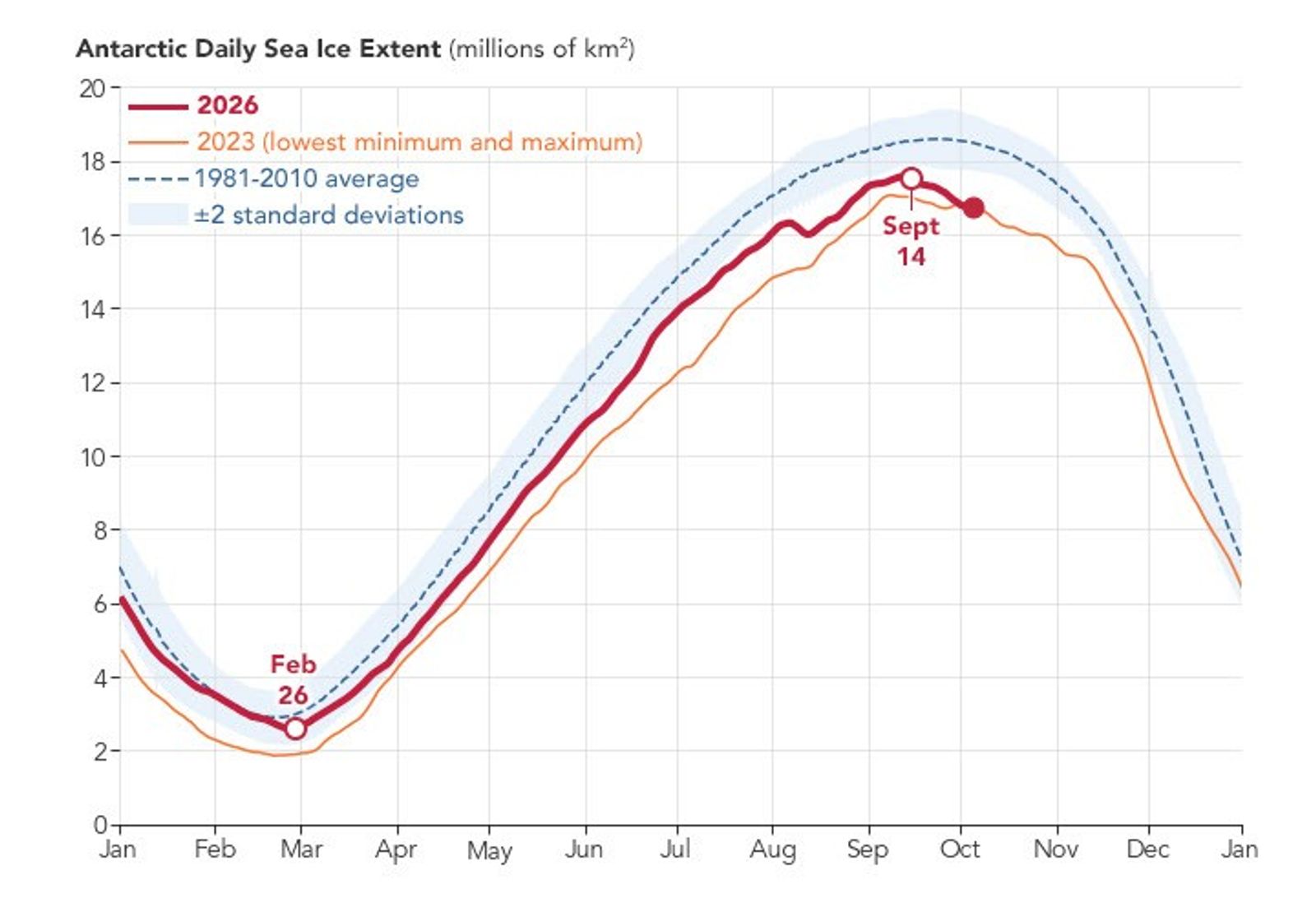
The timing was typical for Antarctic sea ice, which usually reaches its greatest coverage in September near the end of the Southern Hemisphere’s winter. It generally retreats to its annual minimum in February.
Scientists calculate sea ice extent by counting areas where at least 15% of the surface is covered by ice, the threshold commonly used in satellite data.
The measurement relies on satellites carrying passive microwave sensors, which detect microwave energy naturally emitted by Earth. Sea ice emits more of that energy than open water, allowing the sensors to distinguish between them. Microwaves also pass through clouds, so satellites can monitor the ice regularly regardless of weather.
The 2026 result follows a period of substantial swings in Antarctic sea ice. Satellites recorded new winter extent highs in three consecutive years from 2012 through 2014, even as Arctic ice was declining steeply.
That Antarctic climb ended in 2015, and significant decreases began in 2016. Small rebounds have occurred since then, but coverage has generally remained below normal. In 2023, Antarctica recorded both its lowest minimum and lowest maximum.
Even when coverage increases, a single year may not signal a meaningful shift.
Antarctic and Arctic sea ice behave differently in part because of geography. The Arctic is an ocean basin surrounded by land, while Antarctica is a continent surrounded by ocean.
That open water gives Antarctic sea ice more room to spread during winter. It also allows the ice to extend into warmer latitudes, contributing to greater melting during summer.
The satellite record began in late 1978 with NASA’s Nimbus-7. Defense Meteorological Satellite Program satellites contributed observations beginning in 1987, and NASA’s Aqua satellite supplied data between 2002 and 2011. Scientists began using observations from the Japan Aerospace Exploration Agency’s GCOM-W satellite in 2025.
Scientists will continue annual observations to determine whether the decline reflects a long-term change or a statistical fluctuation.