
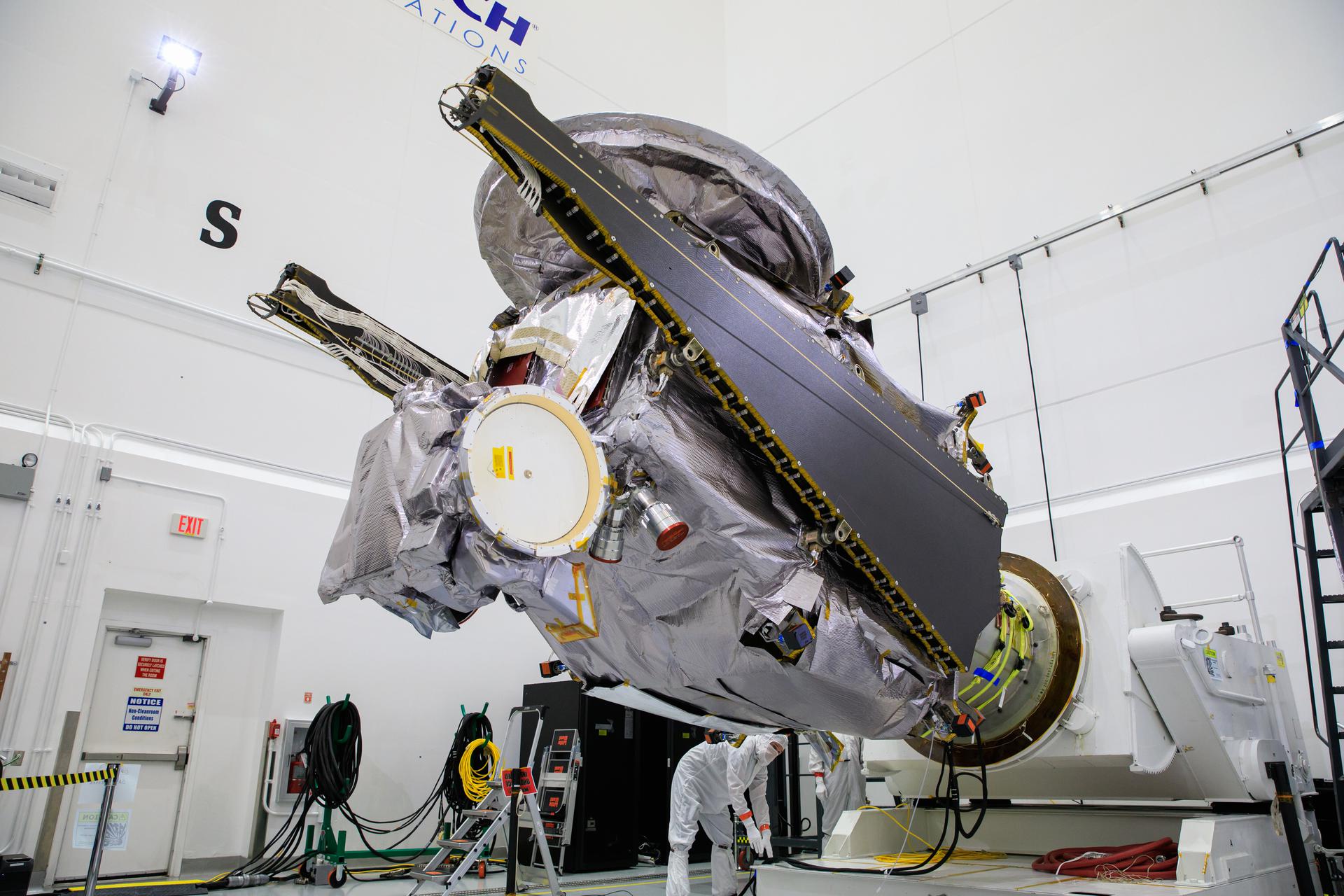
NASA says its Lucy spacecraft has become the first to enter the region of the Jupiter Trojan asteroids, primitive solar-system bodies, after traveling more than 2.2 billion miles since its Oct. 16, 2021, launch. Engineers follow the probe's position using its radio signals and pictures of background stars. That tracking shows Lucy is approaching Jupiter's Lagrange point 4 (L4), though the agency notes that space has no well-defined boundaries.
The L4 region is one of two large, unexplored "islands of stability" where thousands of asteroids share Jupiter's path around the Sun, held in place by the combined pull of the Sun and the gas giant. The L4 group leads Jupiter in its orbit, while a second cluster around Lagrange point 5 trails behind. Both swarms sit about 484 million miles from Jupiter, matching the planet's distance from the Sun, and Lucy will visit members of each.
The Trojans are spread out, more than 6 million miles apart on average, so they will look like moving pinpricks of light against the stars until Lucy closes in on a target.