
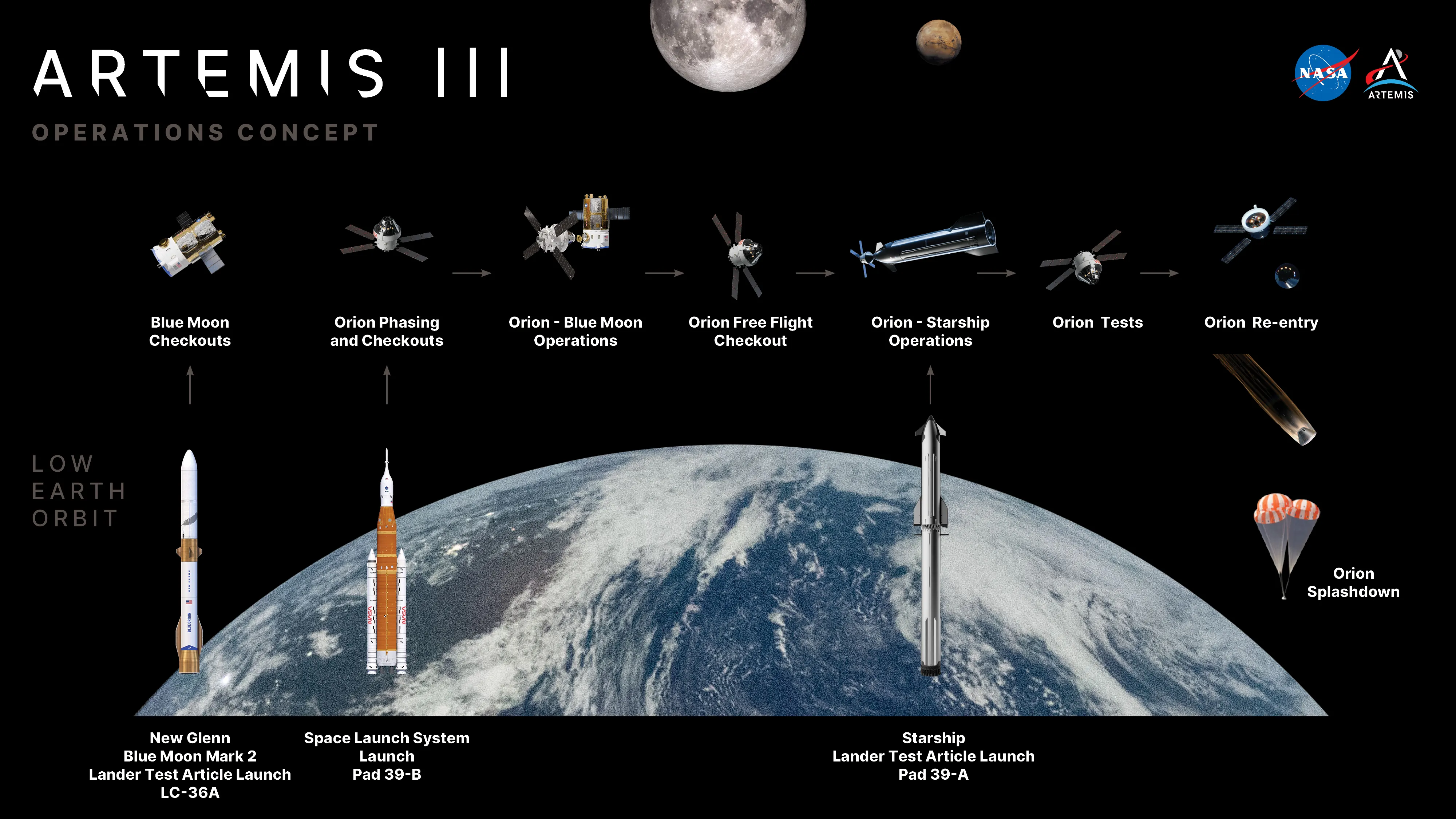
NASA plans to send four astronauts aboard its Orion spacecraft into low Earth orbit, a few hundred kilometers above the planet, in 2027 to work with test versions, or test articles, of Moon landers being developed by Blue Origin and SpaceX, the agency said on Oct. 23.
NASA said the Artemis III crew will be NASA astronauts Randy Bresnik, Frank Rubio and Andre Douglas and European Space Agency astronaut Luca Parmitano. During the planned 14-day mission, crews and flight controllers will practice rendezvous, docking and other procedures needed when Artemis astronauts begin landing near the Moon's South Pole in 2028, according to NASA.
According to NASA, Blue Origin will first launch a test article of its Blue Moon Mark 2 lander into a circular orbit about 440 kilometers up. NASA plans to launch Orion on its Space Launch System rocket from Kennedy Space Center in Florida only days later, once the test article is confirmed healthy.
After docking, astronauts are to spend about two days evaluating the Blue Moon test article, opening the hatch and going inside to check the cabin environment, controls and life-support systems, NASA said. NASA's Human Landing System program said in July that up to two crew members will enter.
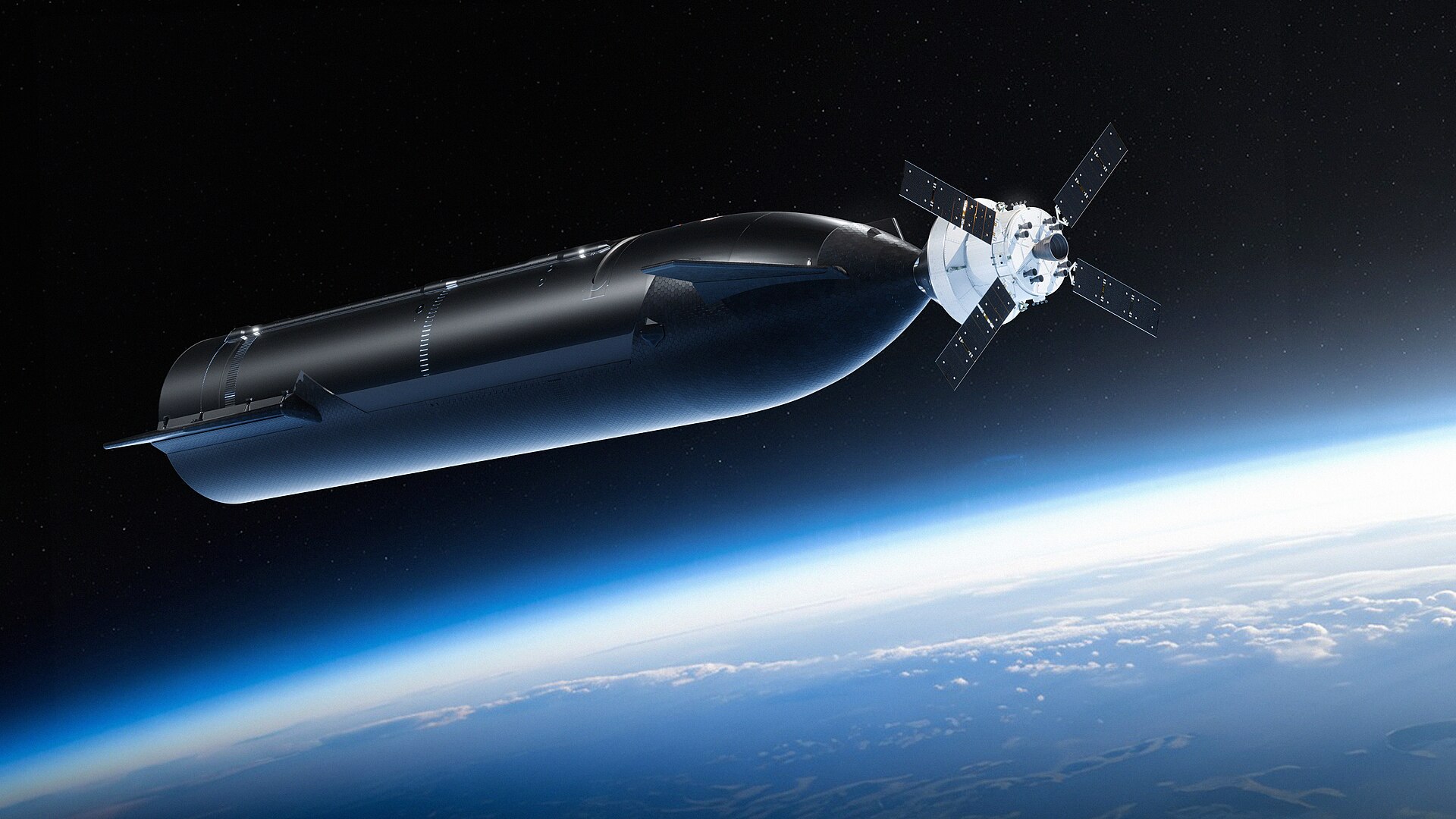
SpaceX will then launch a Starship Version 3 test article from Florida. NASA said that launch comes later because Starship is designed for a much shorter time in orbit than Blue Origin's lander. Orion is to dock with Starship for a test expected to last up to two hours, and the crew will not enter Starship, NASA said.
The two dockings use different layouts: Orion will connect to a port beside Blue Moon's crew cabin, then line up its forward docking system with the one on Starship's nose, according to NASA.

NASA Artemis program manager Jeremy Parsons said the mission is designed to reduce risk before astronauts return to the Moon, adding, "We're launching three spacecraft on three different rockets and testing how they operate together — something NASA has never attempted."
Under realigned contracts with NASA, neither company has been assigned to a specific lunar landing mission, NASA said. The agency said it will decide, based on lander readiness, which company is first selected to carry astronauts to the Moon's surface in 2028.
NASA Administrator Jared Isaacman and other agency leaders laid out the path to a 2028 lunar return at the Oct. 23 update, NASA said.
After the Starship test, Orion and its crew will have up to five more days in orbit, followed by a planned splashdown in the Pacific Ocean off California, according to NASA.