
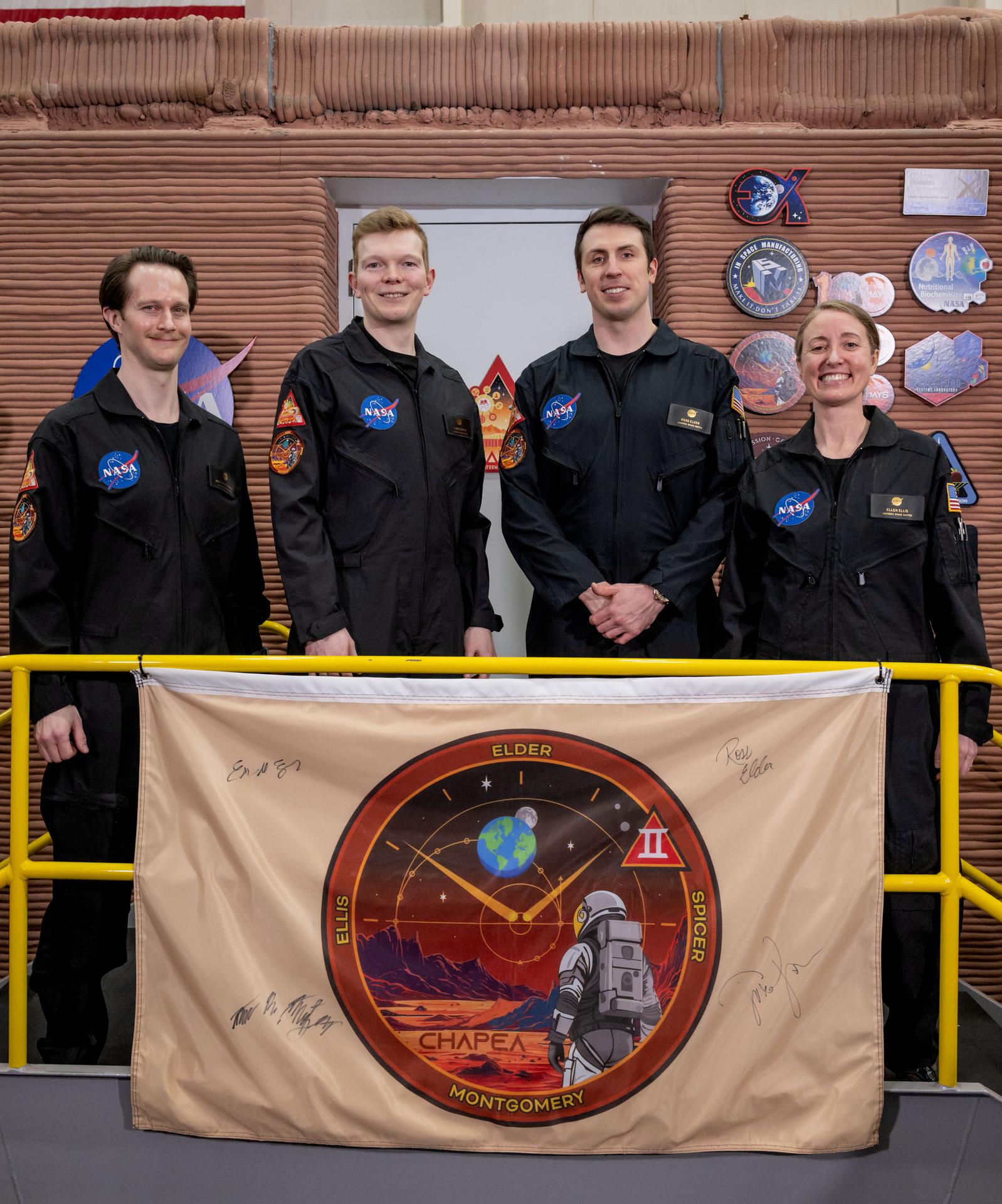
Four volunteers emerged on Oct. 31 from a simulated Mars habitat at NASA's Johnson Space Center in Houston, ending 378 days of isolation in the agency's second Crew Health and Performance Exploration Analog (CHAPEA) mission. The crew, made up of commander Ross Elder, medical officer Ellen Ellis, science officer Matthew Montgomery and flight engineer James Spicer, posed outside for the first time in more than a year, NASA said.
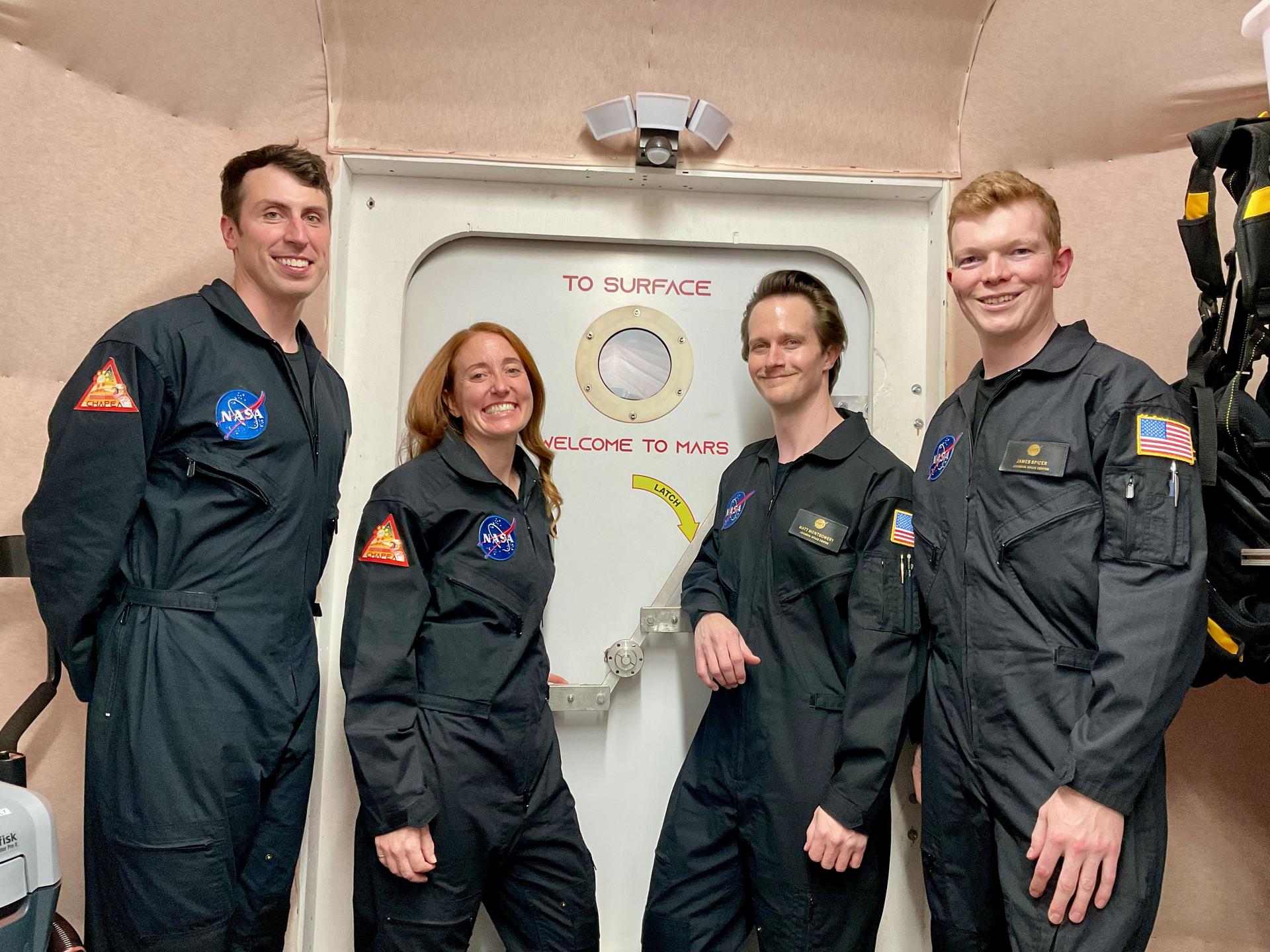
The mission began on Oct. 19, 2025, inside a facility of about 160 square meters. There, the crew simulated Mars operations and spacewalks, exercised, maintained the habitat and grew plants. They worked under stressors that future deep-space crews will likely face, including communication delays, scarce resources and isolation, according to NASA.
Johnson Space Center Director Vanessa Wyche said messages between the crew and the outside world were delayed by 26 to 44 minutes. At one point the group went two full weeks without contact, imitating a blackout that could occur when the Sun sits between Earth and Mars, according to CHAPEA co-investigator Suzanne Bell.